News
Mortgage LTI Cap: Lenders Freed From 15% Limit on 28 Oct
Regulators have loosened the rule that rations big mortgages lender by lender, the court date for the car finance compensation fight is set, two advisers have admitted defrauding clients of £2m, and the government is writing to pensioners who may be missing out on Pension Credit. The first matters if you are buying a home in the next year; the third is a reminder about how to check an adviser.
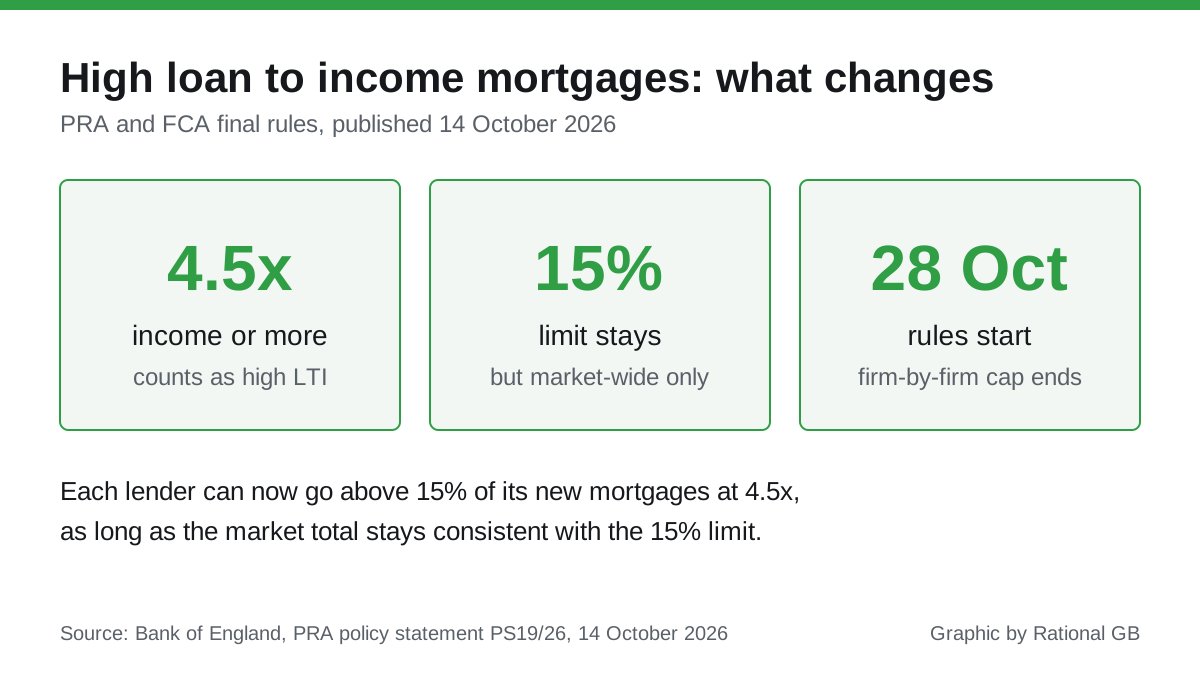
Lenders can do more high loan to income mortgages from 28 October
The Prudential Regulation Authority and the FCA published final rules on 14 October that remove the firm-by-firm cap on high loan to income lending. A high LTI mortgage is one of 4.5 times income or more. Until now each lender could make no more than 15% of its new residential mortgages at that level. From 28 October 2026 an individual lender can go above 15%, as long as the total across all lenders stays consistent with the Financial Policy Committee’s 15% limit. If the market as a whole goes over, the regulators may ask lenders to bring their share back down gradually. The PRA will start publishing the aggregate figure each quarter, beginning with the third quarter of 2026.
The regulators expect more competition at high multiples and say first-time buyers have made up a growing share of this lending. Several respondents to the consultation asked for the 4.5 times threshold itself to be raised to 5 times; that was passed to the FPC and has not changed. So a lender that was close to its own 15% quota may now say yes where it used to say no, but every application is still assessed on affordability. Borrowing more against your income also means a longer route to paying it down. Overpay your mortgage or invest models that trade-off, and Lifetime ISA or pension for a house deposit covers the deposit side. Source: Bank of England, PS19/26.
The car finance compensation challenge will be heard from 16 to 26 February 2027
The FCA said on 13 October that the Upper Tribunal will hear the legal challenges to its motor finance compensation scheme between 16 and 26 February 2027, with judgment expected in the months after. The challenges were brought by Volkswagen Financial Services, Mercedes-Benz Financial Services and Crédit Agricole Auto Finance, and by Consumer Voice. The scheme is partly suspended, and lenders do not have to calculate or pay compensation until the case ends.
If you think you are owed money, you can still complain to your lender directly and free of charge. You do not need a claims firm or law firm, which the FCA says may charge up to 36% of any compensation; do not sign with more than one, or you may pay more than one fee. Not getting a letter yet does not mean you are owed nothing, as some people will not hear until the case is over. Source: FCA.
Two Nexus advisers admit defrauding clients of £2m
The FCA said on 13 October that Kerry Nelson, director of Nexus Independent Financial Advisers and Nexus Investment Managers, and Jacqueline Stephens, the firms’ business operations manager, pleaded guilty at Portsmouth Crown Court to defrauding four clients, who lost £2m between January 2019 and January 2023. Nelson also admitted money laundering. Both are due to be sentenced on 10 December 2026, and the FCA will seek confiscation.
Both firms were FCA authorised, but neither had permission to hold or control client money. That is a detail you can check yourself: the FCA register lists what each firm is allowed to do, and an adviser who asks you to pay money to them, rather than to a platform or provider in your name, is a warning sign whatever their authorisation says. A low-cost platform or robo-adviser keeps your money with a regulated custodian. Source: FCA.
The government is writing to 660,000 households about Pension Credit
The Department for Work and Pensions said on 13 October that it is sending leaflets to 660,000 households in seven areas (Glasgow, Powys, Stockton-on-Tees, inland Cornwall, Birmingham, East Suffolk and Manchester) urging pensioners to check whether they can claim Pension Credit. It is worth more than £4,500 a year on average, and about 1.4 million pensioner households already get it. Independent Age estimates more than a million eligible older people did not claim in 2023/24, missing out on £2.5bn.
Owning your home or having some savings does not rule you out, which is the myth the campaign is aimed at. Pension Credit also opens the door to other help with bills, so it is worth checking for a parent or grandparent even if the amount looks small. The State Pension explained covers how it fits with the rest of retirement income. Source: GOV.UK.