News
ISA Deposits: Savers Put £4.4bn Into Cash ISAs in August
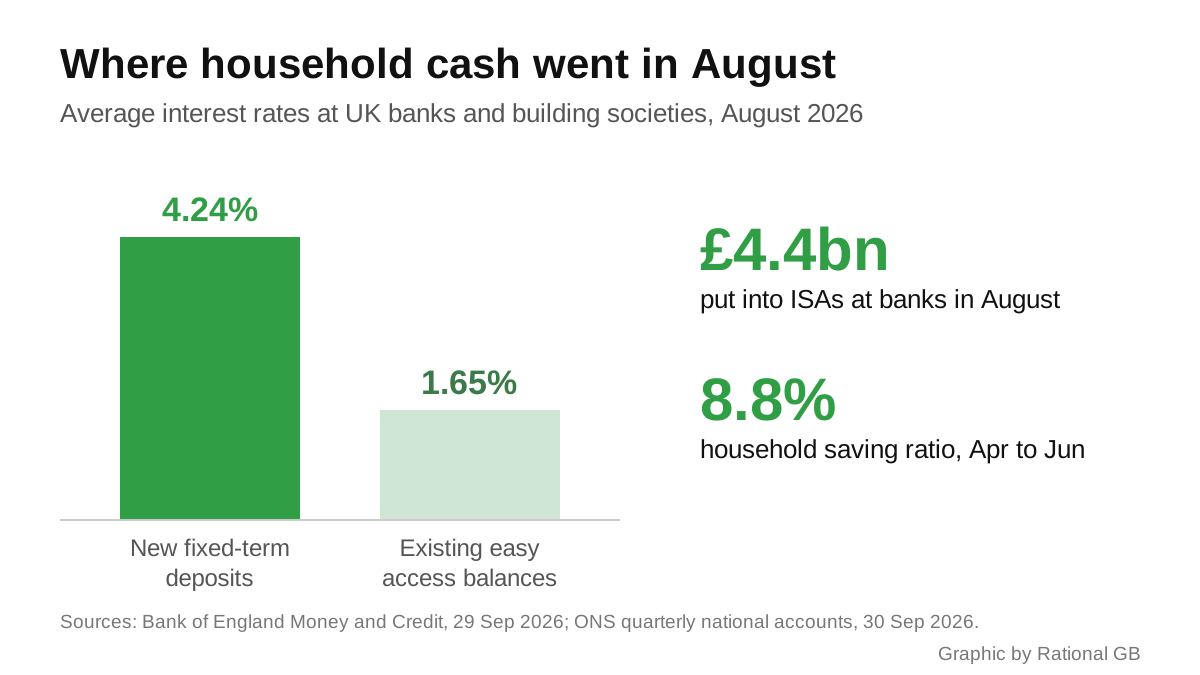
The Bank of England and the ONS both published household figures this week, and together they describe people saving more and moving money into tax-free wrappers. That is the sensible direction. The numbers also show how much is still sitting in accounts paying well below what is available, and the regulator had two reminders about checking who you are dealing with.
Households put £4.4bn into ISAs in August, and pulled £1.6bn from easy access
The Bank of England’s Money and Credit release for August, published on 29 September, shows households added £4.7 billion to their deposits with banks and building societies. Most of it, £4.4 billion, went into ISAs. Another £0.3 billion went into fixed-term accounts and £0.3 billion into accounts paying no interest, while £1.6 billion was withdrawn from interest-bearing easy access accounts.
The rates in the same release explain why the shift makes sense. The average rate on new fixed-term deposits was 4.24 per cent in August, but the average across all existing easy access balances was 1.65 per cent, unchanged on July. On £20,000, the difference between those two averages is about £520 a year, and that is the cost of leaving money where it is. Old easy access accounts are where most of it hides, because the rate on an account opened years ago rarely keeps up with what the same bank offers new customers.
The release covers bank and building society deposits, so these ISA figures are cash ISAs; money going into stocks and shares ISAs at investment platforms is not in them. Which wrapper is right depends on when you need the money, and cash ISA versus stocks and shares ISA sets out the line. If you have an old cash ISA paying little, moving it is a transfer, not a withdrawal, so it does not use this year’s allowance; see how to transfer an ISA and the limits in ISA allowance 2026. Source: Bank of England.
The household saving ratio rose to 8.8%
The ONS quarterly national accounts, published on 30 September, put the household saving ratio at 8.8 per cent in April to June 2026, up 0.2 percentage points, driven by non-pension saving. Real household disposable income per head rose 1.0 per cent in the quarter after falling 0.8 per cent in January to March. GDP growth for the quarter was revised up to 0.5 per cent.
A saving ratio near 9 per cent is high by the standards of the decade before the pandemic, and it is consistent with the Bank figures above: households are holding on to more of their income and parking it in cash. Cash is the right place for an emergency fund and for money needed within a few years. Beyond that, a high saving ratio held in cash is a decision to accept a lower long-run return, and how much to invest per month covers where the line between the two sits. Source: ONS.
InterestMe Financial Planning has gone into administration
The FCA said on 28 September that InterestMe Financial Planning Limited and its appointed representative InterestMe Advisers Limited entered administration on 24 September, with Kroll Advisory appointed as joint administrators. The firms advised on pensions, mortgages and wider financial planning, and InterestMe Financial Planning had agreed to restrictions on its activities in July.
If you are a client, the FCA says the firm did not hold client money or assets; those sit with another regulated firm under rules designed to protect them if a firm fails. Your investments are not lost, but no one is managing them, so the FCA’s advice is to decide which firm will look after them in future. Complaints and compensation claims go through the administrators, and the FSCS has a page for the firm. Be wary of claims management companies offering to help: the FCA says there is no benefit for the vast majority of clients, and any fee comes out of what you get back. The case is a reason to know which firm actually holds your assets, which is covered in how to transfer a pension to a SIPP. Source: FCA.
21 CFD firms have closed after an FCA crackdown on borrowed badges
The FCA said on 25 September that 21 contracts for difference firms have closed since 2025 and three more are cancelling their permissions. Its concern was firms doing little UK business but using their UK authorisation to make linked overseas companies look safer than they were, so customers believed they had UK protections when they did not.
CFDs are leveraged bets on price movements, and losses can build quickly. They have no place in a long-term plan built on diversified funds. The wider lesson applies to any platform: check the FCA register for the exact firm name on your account agreement, not the brand on the app. Our best investment platforms compares FCA-authorised UK providers, and common investing mistakes covers why trading short-term price moves tends to lose. Source: FCA.