News
Bank Rate Held at 3.75%, but 3 of 9 Voted to Raise It
Three official numbers landed in three days, and they all point the same way. Inflation went up, the Bank of England held rates but came closer to raising them, and the earnings figure that sets next April’s state pension came in at 3.9 per cent. None of this is a reason to rearrange a long-term portfolio. Some of it is a reason to look again at cash, fixed rates and your tax position.
Bank Rate held at 3.75%, but three of nine voted to raise it
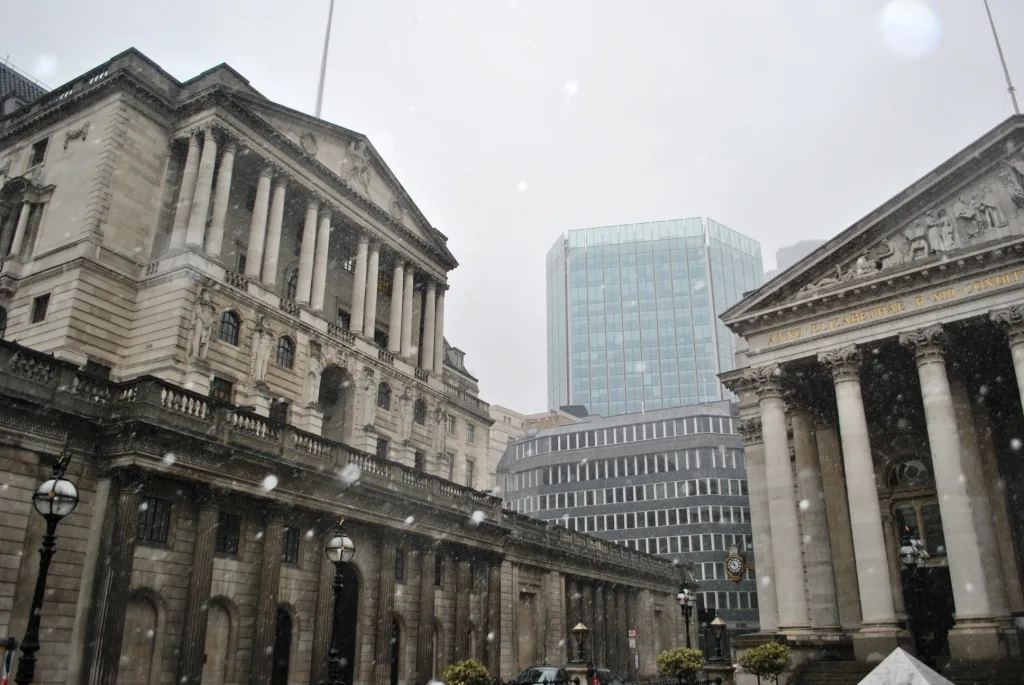
The Monetary Policy Committee voted 6 to 3 to keep Bank Rate at 3.75 per cent, in a decision announced on 17 September. The three dissenters voted for a rise to 4 per cent, and according to CNBC they were Megan Greene, Catherine Mann and Huw Pill. The Bank’s summary says the risks to inflation are “tilted to the upside, and more so than at the time of the July Monetary Policy Report”, driven by energy prices pushed up by the conflict in the Middle East. Governor Andrew Bailey said that the longer the volatility lasts, “the more likely it is we will need to raise Bank Rate”. The next decision is due on 5 November.
The MPC also voted unanimously to run its stock of gilts bought under quantitative easing down to zero by the end of 2034, at an average pace of £46 billion a year, through £20 billion of annual sales alongside gilts that mature.
What this means in practice: nobody should be pricing in rate cuts this year. If you have cash waiting for a better savings rate, the direction of travel for variable rates is flat to up, which slightly weakens the usual argument for locking into a long fix now. If you are remortgaging, it strengthens it. For invested money the decision changes nothing about the plan. Bond prices do move on rate expectations, but a balanced portfolio holds bonds for stability, not as a bet on the next vote. Asset allocation between stocks and bonds covers how that split is meant to behave when rates move, and cash ISA vs stocks and shares ISA covers where waiting money belongs. The decision is at the Bank of England, with the vote detail from CNBC.
CPI rose to 3.1% in August, and fuel did most of it
The Office for National Statistics reported on 16 September that CPI inflation rose to 3.1 per cent in the 12 months to August, up from 2.9 per cent in July. CPIH, which includes owner occupiers’ housing costs, rose to 3.3 per cent. Transport, and motor fuels in particular, made the largest upward contribution. Petrol averaged 161.3p a litre in August, up 9.1p in a month and the highest since November 2022. Diesel rose 14.2p to 181.8p. Motor fuel prices were up 23.0 per cent on a year earlier.
The detail matters more than the headline. Core CPI, which strips out energy, food, alcohol and tobacco, was unchanged at 2.6 per cent, and services inflation was also flat at 3.4 per cent. Food inflation was 1.3 per cent, its lowest since September 2021. So this is an energy shock working its way through rather than broad price pressure, which helps explain why the majority held rather than raised. The Bank expects inflation to rise further over the coming quarters.
For savers the useful comparison is real returns. A savings account paying less than 3.1 per cent is losing purchasing power before tax, and interest above your personal savings allowance is taxed on the nominal rate, not the real one. That is the core case for using your ISA allowance on cash you intend to hold for years, and for not holding more cash than you need over the long run. How much to invest per month covers the split between an emergency fund and money that should be invested. The release is at the ONS.
The state pension is on course for £13,036 a year, above the tax-free allowance
On 15 September the ONS reported that total average earnings, including bonuses, grew 3.9 per cent in May to July. Under the triple lock the state pension rises each April by the highest of that earnings figure, September’s CPI inflation or 2.5 per cent. If 3.9 per cent is the figure used, the full new state pension goes from £241.30 to £250.70 a week, or £13,036.40 a year. The full old basic state pension would rise to £192.10 a week, £9,989.20 a year.
Two caveats. First, it is not settled. September’s CPI figure comes out in October, and with the Bank expecting inflation to keep rising from 3.1 per cent it would need to climb from 3.1 to above 3.9 per cent in a single month to overtake earnings. Unlikely, not impossible. Second, the tax point. The personal allowance is frozen at £12,570, so a full new state pension on its own would be over the tax-free threshold. As MoneySavingExpert reports, the government has committed that pensioners who only just exceed the allowance will not have to deal with paying small amounts of tax in this Parliament. If you have a workplace or private pension on top, the rise uses up more of the allowance, so more of that private income is taxed.
If you are planning retirement income, count the state pension as the taxable base layer it now is, and then look at how the rest is drawn. State pension explained covers the 35-year rule and how to check your forecast, and how much you need to retire puts the £13,000 in context. The projection is at MoneySavingExpert and the earnings data at the ONS.